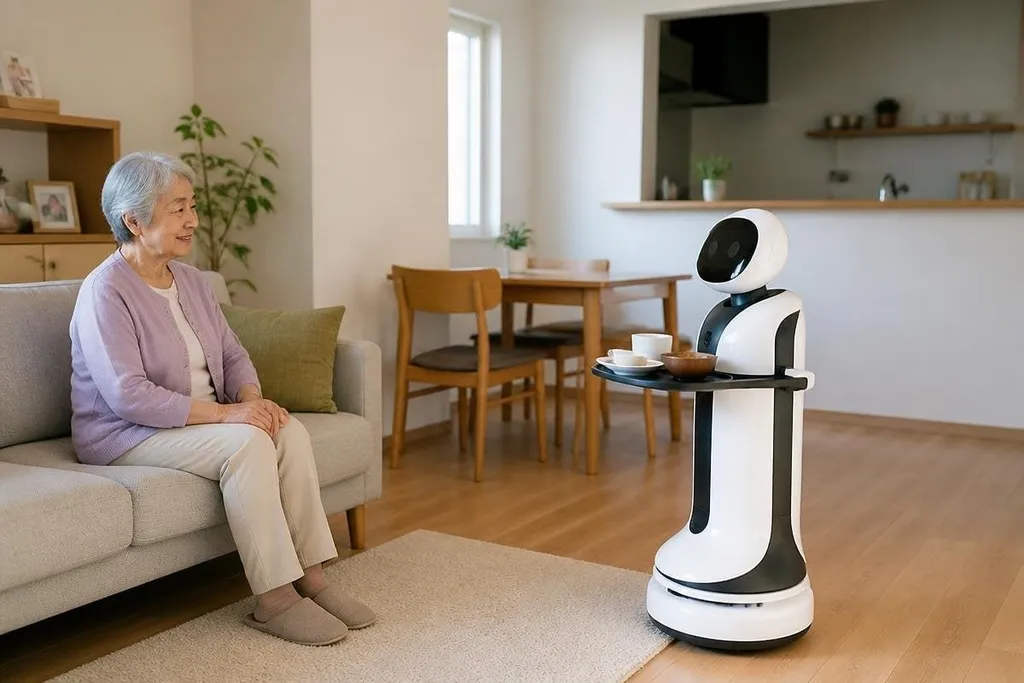
A caregiving robot may remind someone to take medicine, carry a tray, or call for help after a fall. Those jobs sound small until a person has to repeat them across a full day, every day.
The useful question is where a robot can take work away without taking control away from the person.
Quick read
- Caregiving robots can handle repeatable physical tasks and routine prompts.
- Safe design depends on sensors, clear limits, and a human who can step in.
- Robots work best as support for care teams, not as replacements for them.
The work robots can handle
Care includes many tasks that follow a clear pattern. A robot can move supplies, carry food, guide a person through an exercise, or remind them about a scheduled task. These jobs suit machines because the steps can be set in advance and checked as they happen.
The robot may also watch a room for events that need a person’s attention. Cameras, microphones, pressure sensors, and motion sensors can detect changes such as a person leaving a bed or calling for help. The system then sends an alert to a family member, nurse, or care worker.
That alert is useful only when it gives enough detail to act. “Movement detected” leaves too much work for the person receiving it. A better message explains where the event happened and what the robot saw, while keeping the final decision with a human.
Physical help has clear limits
Moving objects is easier than moving people. A tray has a known weight and shape. A person may shift their balance, lose strength, or react without warning. A caregiving robot must detect those changes before it applies force.
This is where torque limits, force sensors, emergency stops, and slow movement matter. Torque is the turning force at a motor. A low torque limit can reduce the chance of a hard push, but it may also leave the robot unable to help someone stand.
The setting changes the risk. A robot carrying laundry in a hallway can run under different rules from one helping a person transfer from a bed to a chair. The second task needs close supervision, tested contact points, and a clear way to stop the motion.
Care is more than a task list
A person receiving care may need conversation, patience, and a sense of control. A robot can repeat a prompt without getting tired, but it cannot replace the judgment of a trained care worker who notices fear, pain, or confusion.
That makes the handoff part of the design. The robot should tell a human what happened, when it happened, and what action it took. It should also record enough data for review without collecting more personal information than the task needs.
Privacy matters inside a bedroom or care home. A camera that watches for falls may also record visitors, private conversations, or medical details. Operators need clear rules for storage, access, and deletion before the robot enters a care setting.
A privacy policy matters more when it names the robot, stored data, access rules, and deletion period. Reports on care robotics from Robot24.com can tie those details to the maker and use case before you compare a system for daily care.
What buyers should check
A care provider or family member can use this short check before choosing a system:
- Name the task: Write down the exact job, such as carrying meals or sending a fall alert.
- Set the handoff: Decide which person receives an alert and how fast they must respond.
- Check the failure mode: Ask what the robot does after a blocked path, weak battery, lost network, or sensor error.
- Test the stop control: Place the emergency stop where a worker can reach it while wearing gloves.
- Review the data: Ask what the robot records, where it stays, and who can view it.
- Plan human care: Keep a person responsible for decisions about health, movement, and consent.
These points separate a useful system from a machine that creates more work. Systems that need constant correction may save fewer minutes than their sales material claims, even if the basic task works in a test room.
The next measure of success
I’d judge a caregiving robot by the time and control it gives back to a person, not by how human its face looks. The next useful proof will come from repeated work in care settings, with records showing when the robot helps, when it stops, and when a human must take over.